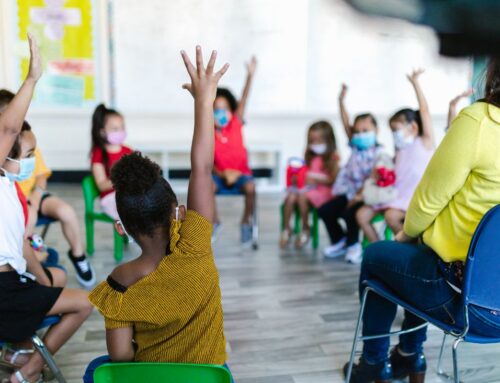


Before I became a scholar of teacher preparation, culturally responsive practice, and educational equity, I was a classroom teacher. For five years, I taught in Title I schools across Miami-Dade County Public Schools as both a general and special education teacher. Those years continue to shape how I understand the research, because I did not first learn about representation as an abstract policy issue. I saw it in the faces of children who were trying to determine whether school was a place that recognized their brilliance, honored their culture, and believed in their future.
That is why the question of Black educator representation is so deeply personal and so urgently practical. Representation is not simply about who stands at the front of a classroom. It is about the relationships, expectations, instructional decisions, cultural knowledge, and sense of belonging that shape a child’s daily school experience. It is about whether students encounter adults who can see them fully – not through deficit, stereotype, or assumption, but through possibility. Research confirms what many Black educators, families, and students have long known: the presence of Black teachers is transformative for all students and especially meaningful for Black students (Lee, 2019; Egalite et al., 2015; Ladson-Billings, 2000). Black educators often serve as cultural brokers, bridging students’ home experiences and school curricula in ways that strengthen engagement, deepen trust, and improve academic outcomes (Villegas & Irvine, 2010). They also provide students with a powerful sense of identity and belonging—conditions that are not peripheral to learning, but central to it (Ladson-Billings, 2000).
The impact is also measurable. Research links access to same-race teachers with improved reading and mathematics outcomes, higher educational aspirations, and lower rates of exclusionary discipline (Hill-Jackson, 2020; Redding, 2019). The presence of same-race teachers can help reduce disproportionate disciplinary actions that contribute to the school-to-prison pipeline, a system of policies and practices that push children out of classrooms and into the criminal justice system (Skiba et al., 2014). For students with disabilities, students navigating poverty, and students whose identities are too often misunderstood in school systems, representation can influence not only how they are taught, but also how they are interpreted, supported, disciplined, and encouraged.
And yet, the educator workforce does not reflect the students it serves. Black students make up approximately 15 percent of the public school student population, while Black teachers represent only about 6 percent of the public school teaching workforce (National Center for Education Statistics, 2022; 2024). This gap matters. It matters because every child deserves access to highly prepared, equity-centered educators. It matters because Black students deserve to see intellectual authority, care, leadership, and academic excellence reflected back to them. It also matters because the presence of Black educators can inspire more Black students to imagine themselves as future teachers, leaders, scholars, and change agents.
Increasing the number of Black educators is not a standalone solution to educational inequity. No single strategy can overcome underfunded schools, inequitable access to rigorous instruction, discriminatory discipline practices, and persistent opportunity gaps. But representation is a powerful equity strategy when it is connected to strong preparation, culturally responsive pedagogy, supportive leadership, and systems that retain and advance educators of color. At NCEED, this work aligns directly with the Teachers and School Leaders pillar, which is grounded in the belief that educational equity begins with placing highly prepared, equity-centered teachers in every classroom and effective, student-focused leaders in every school building.
My own scholarship continues to return to this pathway question: Who is recruited into education? Who is prepared well? Who is supported once they enter the classroom? Who is retained, mentored, protected, and promoted? These questions are central to my work in social emotional learning, personnel preparation, special education, and the experiences of Black women in educational spaces. They are also central to the future of public education. We cannot ask Black educators to carry the moral weight of representation while leaving them isolated, overextended, or unsupported. Representation must be matched by responsibility from systems.
A Call to Action: Targeted Recruitment to Increase Representation
To address the representation gap, school districts and district leaders must move beyond traditional methods and adopt Special Emphasis Recruiting (Hill-Jackson, 2020). This intentional approach focuses on:
- Community Connection: Recruiters should leave their desks and personally engage with the community at accessible places and through community networks (e.g., churches, Black Greek Letter Organizations, and local colleges and universities).
- Supportive Environments: Recruitment is nothing without retention. Districts must create safe spaces and supportive structures that allow Black teachers to thrive without facing the isolation and burnout that often leads to high attrition. This can be done through incorporating open lines of communication that allow educators to share their needs and identify key ways to ensure all educators feel valued in the school community.
- Intentional Mentorship: Establishing targeted programs where novice teachers can gain mentorship from veteran teachers, alongside the creation of affinity groups for peer support, is a powerful way to provide all educators with avenues for navigating the everyday stressors they may face in the classroom.
The research is clear, but the moral imperative is even clearer: Black educators matter. Their presence affirms students, strengthens instruction, expands possibility, and challenges systems to become more responsive and just. Representation tells students that they belong here. Your culture belongs here. Your questions, your voice, your brilliance, and your future belong here.
If we believe that every child deserves to be seen, known, challenged, and supported, then we must build school systems where Black educators are recruited with intention, prepared with excellence, supported with care, and retained with respect. Representation is not symbolic. It is instructional. It is relational. It is structural. And for many students, it is life-changing.
References
Egalite, A. J., Kisida, B., & Winters, M. A. (2015). Representation in the classroom: The effect of own-race teachers on student achievement. Economics of Education Review, 45, 44-52.
Hill-Jackson, V. (2020). Special emphasis recruiting: Intentional recruitment of Black women to the teaching profession. Theory Into Practice, 59(4), 429–440. https://doi.org/10.1080/00405841.2020.1773187
Ladson-Billings, G. (2000). Fighting for our lives: Preparing teachers to teach African American students. Journal of Teacher Education, 51(3), 206-214.
Lee, S. (2019). Black teachers matter: Examining the depths of seven HBCU teacher preparation programs. Urban Education Research & Policy Annuals, 6(2).
National Center for Education Statistics. (2024). Racial/ethnic enrollment in public schools. Condition of Education. U.S. Department of Education, Institute of Education Sciences. https://nces.ed.gov/programs/coe/indicator/cge
National Center for Education Statistics. (2022). Characteristics of 2020–21 public and private K–12 school teachers in the United States: Results from the National Teacher and Principal Survey. https://nces.ed.gov/pubsearch/pubsinfo.asp?pubid=2022113
Redding, C. (2019). A teacher like me: A review of the effect of student–teacher racial/ethnic matching on teacher perceptions of students and student academic and behavioral outcomes. Review of educational research, 89(4), 499-535. https://doi.org/10.3102/0034654319853545
Skiba, R. J., Arredondo, M. I., & Williams, N. T. (2014). More than a metaphor: The contribution of exclusionary discipline to a School-to-Prison Pipeline. Equity & Excellence in Education, 47(4), 546–564. https://doi.org/10.1080/10665684.2014.958965
Villegas, A. M., & Irvine, J. J. (2010). Diversifying the teaching force: An examination of major arguments. The Urban Review, 42(3), 175–192. https://doi.org/10.1007/s11256-010-0150-1