

April is Autism Awareness Month. But for those of us who are autistic, or who love someone on the autism spectrum, every month is about more than awareness. It is about advocacy.
My son was diagnosed with autism at 2½ years old. In the nearly two decades that I have been his mother, I have never wanted to change who he is. I have always loved and valued him exactly as he is. What I have wanted to change is the world around him—a world that too often is not built with him in mind.
Too many of our disabled community members are still pushed to the margins. They are often treated as an afterthought rather than fully welcomed, supported, and included. Many people think inclusion is simple. They may believe that if we are kind, accepting, and open-minded, inclusion will naturally happen. I can tell you, as both an educator of more than 25 years and the parent of children with developmental differences, that inclusion is very easy to do poorly.
There is a big difference between existing in an environment and thriving in one.
There is also a big difference between being allowed to come to the party and having the party planned with you in mind.
That difference matters.
The truth is that disabled people in this country have a long history of exclusion. For many years, people with visible disabilities were treated as though they did not belong in public spaces. In some places, laws were even used to punish or remove disabled people simply for being seen in public. That kind of discrimination sent a clear message: you do not belong here. It pushed many disabled people and families into isolation, shame, and silence.
Over time, disability advocates fought back. Their advocacy helped bring major changes in the law and in public life. Section 504 of the Rehabilitation Act of 1973 was one of the first federal civil rights protections for people with disabilities. It helped establish the right to access public spaces, services, and accommodations without discrimination. A few years later, federal special education law gave children with disabilities the right to a public education and greater access to learning alongside their peers.
That progress mattered, and it still matters.
But laws alone do not create belonging.
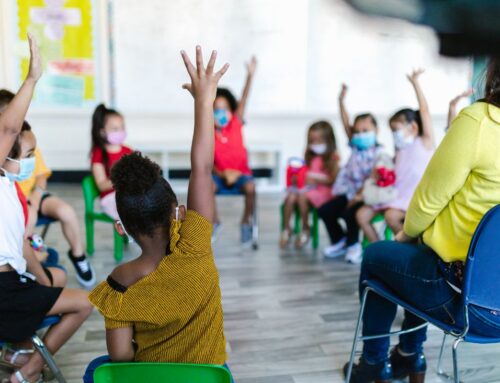
We can have policies on paper and still fail children in practice. We can say a child is “included” while giving them little real support. We can place a child in a general education classroom and call it success, even when that child is struggling, isolated, misunderstood, or denied the tools they need to thrive.
That is not true inclusion.
True inclusion is not just about physical presence. It is not simply about letting a child sit in the room. True inclusion means creating environments where autistic children and other children with disabilities are supported, valued, understood, and able to flourish. It means providing accommodations, relationships, trust, and opportunities. It means recognizing that access is not a favor. It is a right.
My family knows this journey well.
It has not always been easy to ensure that our son was meaningfully included in general education classrooms throughout his K–12 experience. It has taken years of advocacy, persistence, partnership, problem-solving, and faith. It has taken educators who were willing to listen, learn, and work with us. It has taken refusing to settle for him merely being present. We have always wanted more for him than that. We have wanted him to belong. We have wanted him to learn, grow, connect, and be seen for all that he is.
That is what every child deserves.
As a mother, I know this work is deeply personal. As an educator, I also know it is deeply structural. Inclusive schools do not happen by accident. They are built through intentional choices. They are built when educators are trained well, when families are treated as partners, when disability is not viewed as a problem to fix, and when children are supported as full human beings with gifts, needs, dignity, and potential.
So, April is Autism Awareness Month, but I hope we think beyond awareness.
Awareness is important, but it is not enough. Awareness without action can leave things exactly as they are. Acceptance matters, but acceptance must be lived out in our schools, communities, policies, and everyday choices. Advocacy is what moves us from kind words to real change.
When you think about Autism Acceptance Month, I hope you also remember the advocacy that made this month possible. I hope you remember the disabled people, families, and communities who fought for the right to be seen, heard, educated, protected, and included. And I hope you remember how much more work there is still to do.
Our goal should not be to ask autistic children to fit into spaces that were never designed for them. Our goal should be to build schools, communities, and systems that enable them to truly thrive. That is the work of inclusion.